London University's Institute of Historical Research, where I was until recently a seemingly perpetual student, runs the excellent Reviews in History resources on its website.
This provides an opportunity for longer discussions of new history books than can be included even in specialist academic journals and also for the book's author to respond to the review.
Normally it is fairly well mannered stuff with measured reviews being met with grateful thanks for constructive comments on the book in question. But just occasionally it is handbags at dawn, as in the case of Kim Wagner's review of Nick Lloyd's recent The Amritsar Massacre: The Untold Story of One Fateful Day and Dr Lloyd's response.
I haven't read the book, but it's fair to say in general I have little sympathy with the new strain of 'British empire was a good thing and much misunderstood' historical writing, of which the book would appear to be an example. At any rate it seems rather odd that Lloyd should take Wagner to task for having 'absolutely nothing to say about the violence directed against the Indian people by the successor state since 1947' when he was reviewing a book about the 1919 Amritsar massacre carried out by representatives of the British Raj.
Friday, March 16, 2012


Friday, March 09, 2012
Health bill supporters need to tell us what good they think it will do
I have never been a great fan of the Lib Dem Spring conference - it is always a long journey and by the time you have got into the swing of things it's time to go home again. So I am down here in Watford not up in Gateshead. This spares me the dilemma of how to vote in any debate on the health bill.
Although I should perhaps be reassured by the recent articles by Shirley Williams and David Boyle, for me their arguments for the bill highlight a problem. This is that the points made by Lib Dems in favour of the bill are couched in negative not positive terms. We are told that it is now much less bad than it was and a vindication of our participation in government - what wouldn't those horrid Tories have done left to their own devices? But given the importance of the NHS, in particular to Lib Dems, this on its own won't do. The bill's supporters need to explain why they think it will lead to a better NHS for patients, one that Liberals can be proud of. Making a bad bill less bad may be commendable of itself but that doesn't make it good. And if it is a good bill we need to hear exactly what is good about it.
Not being an expert on health policy myself I have no obvious way of getting beneath the rhetoric and deciding whether the bill is worthy of support or an outrageous sell out to the private sector. I could have a go at reasoning it out, as follows. In the past 20 years government of all stripes (Yes, Labour too) have introduced reforms that broadly embrace some sort of market principles and private sector involvement in NHS services. There may be many reasons for this, but the most obvious one is that a exclusive reliance on direct in-house service provision will inevitably lead either to high costs/inefficiency or to long waiting lists and poor service, or quite possibly all of these.
This is because the NHS is a huge organisation, providing a wide range of services, the demand for which is unlikely to be steady and predictable, and which is at the same time virtually limitless. If it is maintained as a lean and efficient machine with no slack in the system then it is going to be unable to cope with any sudden increased demands on its services, leading to long waiting lists and times. And if provision is made to cope with all eventualities then there are likely to be long periods when services are not operating at full capacity, thus creating huge financial waste. Given the size of the NHS both things are likely to happen. So private sector provision is a way of adding flexibility and coping with the unexpected - all the more necessary if patients are to be treated as human beings not numbers on a waiting list.
So far so good, but beyond that I'm a bit stumped. I have no real way of calculating the precise level at which private sector involvement and competition among NHS providers ceases to be what is necessary for high quality services to patients and starts to be a surrender to greedy capitalists. Nor can I really say whether this is all best organised by the PCTs (as at present) or GP commissioning (as proposed).
I could simply make my mind up on the basis of who is on which side. If David Boyle and Shirley Williams support the bill then perhaps it is a good thing. I could let myself be swayed in favour of the bill by the obvious humbug of Labour's Andy Burnham, who was health secretary in a government which introduced market-orientated reforms and greater private sector involvement, but who now seems to be a born-again Clause 4 supporter.
The opposition of organisations representing NHS professionals isn't necessarily a reason to oppose the bill - professional bodies usually resist change and we should be guided by what is best for patients. At the same I am willing to believe that the level of ignorance that central government demonstrates about local government when introducing its various exciting reforms might well be replicated in its dealings with the NHS.
So I am relieved to be spared the ordeal of voting on this at conference. Even if Lib Dem delegates do vote against the government's proposals, even as amended, this won't necessarily kill the bill. But if Lib Dem ministers do wish to pass it, and not have every future problem that the NHS faces blamed on it, then they need to do more to explain what they believe are its merits and how it will benefit patients.
Although I should perhaps be reassured by the recent articles by Shirley Williams and David Boyle, for me their arguments for the bill highlight a problem. This is that the points made by Lib Dems in favour of the bill are couched in negative not positive terms. We are told that it is now much less bad than it was and a vindication of our participation in government - what wouldn't those horrid Tories have done left to their own devices? But given the importance of the NHS, in particular to Lib Dems, this on its own won't do. The bill's supporters need to explain why they think it will lead to a better NHS for patients, one that Liberals can be proud of. Making a bad bill less bad may be commendable of itself but that doesn't make it good. And if it is a good bill we need to hear exactly what is good about it.
Not being an expert on health policy myself I have no obvious way of getting beneath the rhetoric and deciding whether the bill is worthy of support or an outrageous sell out to the private sector. I could have a go at reasoning it out, as follows. In the past 20 years government of all stripes (Yes, Labour too) have introduced reforms that broadly embrace some sort of market principles and private sector involvement in NHS services. There may be many reasons for this, but the most obvious one is that a exclusive reliance on direct in-house service provision will inevitably lead either to high costs/inefficiency or to long waiting lists and poor service, or quite possibly all of these.
This is because the NHS is a huge organisation, providing a wide range of services, the demand for which is unlikely to be steady and predictable, and which is at the same time virtually limitless. If it is maintained as a lean and efficient machine with no slack in the system then it is going to be unable to cope with any sudden increased demands on its services, leading to long waiting lists and times. And if provision is made to cope with all eventualities then there are likely to be long periods when services are not operating at full capacity, thus creating huge financial waste. Given the size of the NHS both things are likely to happen. So private sector provision is a way of adding flexibility and coping with the unexpected - all the more necessary if patients are to be treated as human beings not numbers on a waiting list.
So far so good, but beyond that I'm a bit stumped. I have no real way of calculating the precise level at which private sector involvement and competition among NHS providers ceases to be what is necessary for high quality services to patients and starts to be a surrender to greedy capitalists. Nor can I really say whether this is all best organised by the PCTs (as at present) or GP commissioning (as proposed).
I could simply make my mind up on the basis of who is on which side. If David Boyle and Shirley Williams support the bill then perhaps it is a good thing. I could let myself be swayed in favour of the bill by the obvious humbug of Labour's Andy Burnham, who was health secretary in a government which introduced market-orientated reforms and greater private sector involvement, but who now seems to be a born-again Clause 4 supporter.
The opposition of organisations representing NHS professionals isn't necessarily a reason to oppose the bill - professional bodies usually resist change and we should be guided by what is best for patients. At the same I am willing to believe that the level of ignorance that central government demonstrates about local government when introducing its various exciting reforms might well be replicated in its dealings with the NHS.
So I am relieved to be spared the ordeal of voting on this at conference. Even if Lib Dem delegates do vote against the government's proposals, even as amended, this won't necessarily kill the bill. But if Lib Dem ministers do wish to pass it, and not have every future problem that the NHS faces blamed on it, then they need to do more to explain what they believe are its merits and how it will benefit patients.
Tuesday, March 06, 2012
In praise of Eugene McCabe
When I saw that the Slugger O'Toole blog contained a tribute to Eugene McCabe I assumed that the octogenerian Irish author must have died.
Happily this appears not to be the case and whatever has triggered it Andy Pollak's article draws welcome attention to McCabe's work.
Eugene McCabe is not as well-known on this side of the Irish Sea as he ought to be, perhaps because he is hardly prolific, perhaps because he apparently lives a quiet life on his Monaghan farm and is not part of any literary media circuit.
Nonetheless he is one of the most powerful and insightful writers about Ulster's divided community. His one novel, 1992's Death and nightingales, which portrays the troubled relationship between a Protestant stepfather and his Catholic stepdaughter, is a masterpiece that works both as a story in itself and as political allegory.
Likewise the short stories collected in the volume Heaven lies about us highlight the complexities of a situation where members of both communities live side by side with historical hatreds never far from the surface.
Anyone looking for the great literature of the Northern Ireland troubles (as opposed to the self-serving literary productions of its politicians) should check out McCabe's work.
Happily this appears not to be the case and whatever has triggered it Andy Pollak's article draws welcome attention to McCabe's work.
Eugene McCabe is not as well-known on this side of the Irish Sea as he ought to be, perhaps because he is hardly prolific, perhaps because he apparently lives a quiet life on his Monaghan farm and is not part of any literary media circuit.
Nonetheless he is one of the most powerful and insightful writers about Ulster's divided community. His one novel, 1992's Death and nightingales, which portrays the troubled relationship between a Protestant stepfather and his Catholic stepdaughter, is a masterpiece that works both as a story in itself and as political allegory.
Likewise the short stories collected in the volume Heaven lies about us highlight the complexities of a situation where members of both communities live side by side with historical hatreds never far from the surface.
Anyone looking for the great literature of the Northern Ireland troubles (as opposed to the self-serving literary productions of its politicians) should check out McCabe's work.
On Norman St John Stevas and Chelmsford
Norman St John Stevas, who died on Friday, represented Chelmsford in parliament, a constituency that for much of the 1970s and 80s was a top Liberal target seat. The Liberal candidate there was Stuart Mole, speechwriter to David Steel and one of the party's rising stars.
However much one wished for a Liberal victory there, I remember thinking it a pity that, of all the Tory MPs we might be glad to see the back of, we were trying to oust one of the few who seemed quite a good egg. When St John Stevas announced his retirement at the 1987 general election I assumed that his semi-celebrity status had helped the Tories retain the seat in the past and it would now fall into our hands.
Then someone who knew the constituency told me that whatever St John Stevas's positive qualities he was a less-than-assiduous constituency MP and that much of the Liberal momentum in the seat had come from pointing this out. Such a view seemed confirmed by the Conservative majority increasing in 1987 from three figures to more than 8,000.
Thereafter the Lib Dem challenge in Chelmsford faded, although one hopes that our improved result there in 2010 means that we may yet one day take the seat.
However much one wished for a Liberal victory there, I remember thinking it a pity that, of all the Tory MPs we might be glad to see the back of, we were trying to oust one of the few who seemed quite a good egg. When St John Stevas announced his retirement at the 1987 general election I assumed that his semi-celebrity status had helped the Tories retain the seat in the past and it would now fall into our hands.
Then someone who knew the constituency told me that whatever St John Stevas's positive qualities he was a less-than-assiduous constituency MP and that much of the Liberal momentum in the seat had come from pointing this out. Such a view seemed confirmed by the Conservative majority increasing in 1987 from three figures to more than 8,000.
Thereafter the Lib Dem challenge in Chelmsford faded, although one hopes that our improved result there in 2010 means that we may yet one day take the seat.
Friday, March 02, 2012
Rediscovering Al Stewart
With musical artists as with authors, there are some that one follows and buys their every work, others who one likes for a while before moving on to other things.
So while I loved Al Stewart's Year of the Cat album, its successor Time Passages wasn't nearly as good, and I didn't bother with any of his other releases. And while it seems rather shallow of me, back in the 80s, I was aware that it was a bit uncool to like an artist who mainly wrote and performed songs on historical themes. It had overtones of the then much derided Prog Rock.
But recently I found Stewart's most recent studio album Sparks of ancient light on eMusic and downloaded it out of curiosity, half expecting it to be an even paler imitation of Year of the Cat than Time Passages had been. In fact it is a little gem, reminding me of what made Stewart an interesting songwriter in the first place
Although his songs do often deal with historical subjects rather than the familiar confessional themes of singer-songwriters, he avoids the twin evils of Spinal Tap Stonehenge bombasm or Steeleye Span morris-dancing twee-ness. Instead he milks historical topics for their human angle. So Like William McKinley is not an ode to an American president but rather a meditation on lost love with a historical analogy somewhere in there. Anyway the link is to a live performance of my favourite song on the album 'Hanno the Navigator' - and the album title is also taken from the lyric of this track.
I may now even explore the rest of Stewart's oeuvre.
So while I loved Al Stewart's Year of the Cat album, its successor Time Passages wasn't nearly as good, and I didn't bother with any of his other releases. And while it seems rather shallow of me, back in the 80s, I was aware that it was a bit uncool to like an artist who mainly wrote and performed songs on historical themes. It had overtones of the then much derided Prog Rock.
But recently I found Stewart's most recent studio album Sparks of ancient light on eMusic and downloaded it out of curiosity, half expecting it to be an even paler imitation of Year of the Cat than Time Passages had been. In fact it is a little gem, reminding me of what made Stewart an interesting songwriter in the first place
Although his songs do often deal with historical subjects rather than the familiar confessional themes of singer-songwriters, he avoids the twin evils of Spinal Tap Stonehenge bombasm or Steeleye Span morris-dancing twee-ness. Instead he milks historical topics for their human angle. So Like William McKinley is not an ode to an American president but rather a meditation on lost love with a historical analogy somewhere in there. Anyway the link is to a live performance of my favourite song on the album 'Hanno the Navigator' - and the album title is also taken from the lyric of this track.
I may now even explore the rest of Stewart's oeuvre.
Jenny Tonge - a case of not being able to have it both ways
The late Conor Cruise O'Brien used to refer to the sense of liberation he felt once he was no longer involved in party politics. It enabled him express his views freely without being bound by any collective responsibility. On the issues that interested him, such as Northern Ireland and the Middle East conflict, his views were at odds with the political mainstream. As a party politician he was fettered by the need to express the predictable well-meaning banalities that are expected on such topics. As a writer free of party ties he was free to follow the logic of his own arguments even if his views caused offence.
Jenny Tonge is hardly a thinker in O'Brien's class (and he had rather different views on Israel), but similar considerations apply. The Israel/Palestine conflict is an issue on which mainstream politicians in the West watch their words and strive for balance because what they say reflects more widely on their party and even on their country. It is hard to combine holding public office as a respresentative of a political party with expressing controversial opinions on issues like this. So Baroness Tonge has had to choose between resigning the Lib Dem whip or apologising for comments which the party leadership found embarrassing and offensive.
Tonge's defenders will doubtless say that there is nothing terribly controversial about saying Israel won't 'last forever' because it is true of any political entity. But this won't quite do. In such matters context is all important. If a well-known politician were to say with reference to Scotland becoming independent that the United Kingdom may not last in its present form then it would be relatively uncontroversial. Every expectation is that if such an eventuality arises it will happen peacefully and by mutual consent. If they made a similar comment with regard to Northern Ireland, with its recent history of politial violence, it would immediately raise the spectre of a United Ireland and the hackles of the Ulster Unionists. In the case of Israel, the existence of which has been controversial from its inception, saying it will not last forever is clearly going to be read as a thinly-veiled threat.
A similar point can be made about Tonge's previous faux pas in saying that had she lived in Occupied Palestine she might have considered becoming a suicide bomber. At one level this is such a statement of the bleeding obvious as to be hardly worth saying. Similarly had I grown up in one of the world's major conflict zones rather than in Watford I might not have arrived at the warm cuddly Liberal opinions that I hold. Who knows what any of us might do if we lived somewhere that was beset by persistent violent conflict. So the purpose of Tonge's comments could only have been to express some kind of identification with Palestinian suicide bombers.
There are good reasons why blandness tends to prevail on such subjects from the mouths and pens of those holding public office. Apart from anything else, the British government might reasonably expect to play some sort of role in a future peace process and it doesn't really help if it (or the parties comprising it) are seen by one side as so partisan that they cannot play the role of honest broker.
So it is right that if Jenny Tonge wishes to continue making the sort of comments on Israel/Palestine that have become her trademark she does so from a position where she is clearly not a representative of the Liberal Democrats.
Jenny Tonge is hardly a thinker in O'Brien's class (and he had rather different views on Israel), but similar considerations apply. The Israel/Palestine conflict is an issue on which mainstream politicians in the West watch their words and strive for balance because what they say reflects more widely on their party and even on their country. It is hard to combine holding public office as a respresentative of a political party with expressing controversial opinions on issues like this. So Baroness Tonge has had to choose between resigning the Lib Dem whip or apologising for comments which the party leadership found embarrassing and offensive.
Tonge's defenders will doubtless say that there is nothing terribly controversial about saying Israel won't 'last forever' because it is true of any political entity. But this won't quite do. In such matters context is all important. If a well-known politician were to say with reference to Scotland becoming independent that the United Kingdom may not last in its present form then it would be relatively uncontroversial. Every expectation is that if such an eventuality arises it will happen peacefully and by mutual consent. If they made a similar comment with regard to Northern Ireland, with its recent history of politial violence, it would immediately raise the spectre of a United Ireland and the hackles of the Ulster Unionists. In the case of Israel, the existence of which has been controversial from its inception, saying it will not last forever is clearly going to be read as a thinly-veiled threat.
A similar point can be made about Tonge's previous faux pas in saying that had she lived in Occupied Palestine she might have considered becoming a suicide bomber. At one level this is such a statement of the bleeding obvious as to be hardly worth saying. Similarly had I grown up in one of the world's major conflict zones rather than in Watford I might not have arrived at the warm cuddly Liberal opinions that I hold. Who knows what any of us might do if we lived somewhere that was beset by persistent violent conflict. So the purpose of Tonge's comments could only have been to express some kind of identification with Palestinian suicide bombers.
There are good reasons why blandness tends to prevail on such subjects from the mouths and pens of those holding public office. Apart from anything else, the British government might reasonably expect to play some sort of role in a future peace process and it doesn't really help if it (or the parties comprising it) are seen by one side as so partisan that they cannot play the role of honest broker.
So it is right that if Jenny Tonge wishes to continue making the sort of comments on Israel/Palestine that have become her trademark she does so from a position where she is clearly not a representative of the Liberal Democrats.
Friday, February 10, 2012
Left Liberalism's intellectual cringe towards Labour
It always irritates me when fellow Lib Dems bang on about conspiracies by 'the right' of the party, or accuse colleagues of being crpyto-Tories. To be consistent I should apply similar standards when uncomradely sentiments are expressed by those I agree with. So it is a rather over the top, if typically er... forthright for Dan Falchikov to accuse the members of ginger group Liberal Left of 'seeking to work their passage into the Labour party'.
Yet on the substance of the issue, Dan is surely right (and Jonathan Calder makes a similar critique of Liberal Left here). What frustrates me about the Lib Dem left is that it seems to me guilty of an intellecual cringe towards socialism/the Labour party and their unquestioning belief in the benificence of state action. Rather than define a clear Liberal worldview, it effectively allows Labour to define our attitude to public spending - we have to support (or promise to exceed) Labour's spending commitments unless we want to be thought right-wing. We may disagree with Labour about constitutional reform, civil liberties or overseas wars, but apparently not on the core of government business.
Back in my dim distant youth, I joined the Lib Dems precisely because I held caring/compassionate/centre-left/Guardian reading Liberal values but doubted whether greater state intervention was always the best means of putting such beliefs into practice. In my years of party activism one of the things I have found most frustrating is that way that whenever anyone seeks to explore and define the differences between Labour/socialist and Liberal values and policies, there will always be someone on the left of the party ready to label this right-wing.
Yet on the substance of the issue, Dan is surely right (and Jonathan Calder makes a similar critique of Liberal Left here). What frustrates me about the Lib Dem left is that it seems to me guilty of an intellecual cringe towards socialism/the Labour party and their unquestioning belief in the benificence of state action. Rather than define a clear Liberal worldview, it effectively allows Labour to define our attitude to public spending - we have to support (or promise to exceed) Labour's spending commitments unless we want to be thought right-wing. We may disagree with Labour about constitutional reform, civil liberties or overseas wars, but apparently not on the core of government business.
Back in my dim distant youth, I joined the Lib Dems precisely because I held caring/compassionate/centre-left/Guardian reading Liberal values but doubted whether greater state intervention was always the best means of putting such beliefs into practice. In my years of party activism one of the things I have found most frustrating is that way that whenever anyone seeks to explore and define the differences between Labour/socialist and Liberal values and policies, there will always be someone on the left of the party ready to label this right-wing.
I'm in print again
 My research article 'The myth of New Liberalism: continuity and change in Liberal politics 1889-1914' appears in the latest volume of the Revue Francaise de Civilisation Britannique (my article is in English). It is part of a special edition of the journal on the British Liberal party 1906-1924. It includes contributions by Kenneth O. Morgan (on Asquith and Lloyd George), Paul Addison (on Churchill as a Liberal) and Martin Pugh (on Liberals and the role of women in politics).
As the title suggests, in my article I argue that the Asquith government's welfare reforms were less a product of a 'New Liberal' ideology and more a sign of the resilience and adaptability of 'Old' Liberalism. However, as the party supported, but was not defined by its commitment to welfare reforms, it was not well-prepared to fight the rise of the Labour party in the changed political circumstances after the first world war.
The key point I want to get across here is that you should
order a copy online and read the essays, including my own (you can do so using the link above). At 160-odd pages it is more like buying a book than a magazine; two-thirds of articles are in English, so it doesn't matter if you don't read French, although if you do and are interested in Liberal history it will be a real treat.
At 20 Euros (including postage) for the volume its value for money compares very well with buying historical monographs in English on Liberal history, which are often priced at over £50 for little more than 200 pages. And also in a small way it encourages study of Liberal history beyond the Anglophone world. So hurry, hurry while stocks last!
Return of Psychic Psmith
Until a few years ago the Sunday Telegraph was my preferred weekend reading. Among the reasons I stopped getting it was that a new editor ditched the Psychic Psmith spoof horoscope column, which was among the best thing in the newspaper.
I now find that Psychic can now be read online, although it appears I have missed several months of his predictions. I particularly liked his entry for 18 January
I now find that Psychic can now be read online, although it appears I have missed several months of his predictions. I particularly liked his entry for 18 January
...your very own Psychic Psmith was the only astrologer working in the British media who predicted the upcoming Little Chef restaurant closures... other leading media star-gazers, such as Polly Toynbee at the Guardian, were nowhere near this story. Chalk another one up to the Psychster
Sunday, January 22, 2012
Scottish independence referendum revisited
Last week's article by Katy Gordon on Liberal Democrat Voice this week makes one fear that leading Lib Dems north of the border are still falling into Alex Salmond's trap of branding us with the 'Unionist' parties.
We now run the risk of being portrayed, with some justification, as a home rule party that insists home rule isn't an option in the referendum and as supporting votes for 16-year-olds but opposing it for the referendum. Those will be tricky positions to to explain to the electorate.
I have mentioned recently the very wise advice given by Dan Falchikov on this subject that the party would do well to heed. I note that my former Watford colleague Andy Canning, himself a formidable campaigner, is arguing in similar vein in the responses to Katy Gordon's article. He comments, with regard to the 2011 Holyrood election:
It seems to me that Lib Dems north of the border have such visceral loathing of Alex Salmond that many of them have lost their reason regarding how to fight back against him. But the new Scottish party leader Willie Rennie is an old pro when it comes to electoral strategy. Let's hope he will lead the party back towards rationality.
We now run the risk of being portrayed, with some justification, as a home rule party that insists home rule isn't an option in the referendum and as supporting votes for 16-year-olds but opposing it for the referendum. Those will be tricky positions to to explain to the electorate.
I have mentioned recently the very wise advice given by Dan Falchikov on this subject that the party would do well to heed. I note that my former Watford colleague Andy Canning, himself a formidable campaigner, is arguing in similar vein in the responses to Katy Gordon's article. He comments, with regard to the 2011 Holyrood election:
...the active hostility to the SNP led the Lib Dem leadership to totally misunderstand the feelings of the electorate and we were punished by a wholesale switch of the Lib Dem vote to the SNP lock, stock and barrel.
It seems to me that Lib Dems north of the border have such visceral loathing of Alex Salmond that many of them have lost their reason regarding how to fight back against him. But the new Scottish party leader Willie Rennie is an old pro when it comes to electoral strategy. Let's hope he will lead the party back towards rationality.
Sunday, January 15, 2012
Is lack of funding really the only possible explanation for a school's weakness?
We only get newspapers at the weekend and have just reverted back to the Guardian and Observer after an unhappy dalliance with the Independent (too boring and worthy, often still unread by Monday).
To my delight it appears that Polly Toynbee's column has disappeared from the Saturday paper, with the slot now occupied by Jonathan Freedland, who at least has other things to say besides calling for higher public spending.
But the spirit of Toynbeeism is present in a letter from Dr Selina Todd, an Oxford admissions tutor. Her main point, with which I agree, is that comprehensive education gives students an 'excellent foundation for university' so it is wrong to think of students succeeding 'in spite' of going to comprehensive schools.
So far so good, but Dr Todd then concludes:
Hang on a minute here. Even the late Labour government's worst enemies would concede that it spent a lot of money on schools in the days when boom and bust had still been abolished. There hasn't been time for the effects of austerity (whether one considers it painful but necessary or ideologically driven) to filter through. So if comprehensive schools have been failing because of lack of funding, then there really is no hope. Whatever party is in power, they are unlikely to preside over a further massive increase in school funding so if one accepts Dr Todd's argument then struggling schools will never succeed.
It does seem crudely reductionist to suggest that the only possible explanation for the failure of a school is lack of government investment. Surely schools are complex organisations whose success or lack of it could have a number of explanations (and certainly level of funding is an important one). Do the performance of headteachers, governing bodies, the nature of the intake, the quality of the staff, whether the school has an ethos of aspiration for its students etc. have no impact at all on a school's performance?
One would hope that in the 'imaginative lessons' students take part in at comprehensive schools they learn that explanations for social phenomena are often complex and not easily reducible to a monocausal explanation. One hopes that recognising this won't disadvantage them when their application is read by an Oxford admissions tutor.
To my delight it appears that Polly Toynbee's column has disappeared from the Saturday paper, with the slot now occupied by Jonathan Freedland, who at least has other things to say besides calling for higher public spending.
But the spirit of Toynbeeism is present in a letter from Dr Selina Todd, an Oxford admissions tutor. Her main point, with which I agree, is that comprehensive education gives students an 'excellent foundation for university' so it is wrong to think of students succeeding 'in spite' of going to comprehensive schools.
So far so good, but Dr Todd then concludes:
Any weaknesses with comprehensive schools are due to the lamentable lack of government investment in them.
Hang on a minute here. Even the late Labour government's worst enemies would concede that it spent a lot of money on schools in the days when boom and bust had still been abolished. There hasn't been time for the effects of austerity (whether one considers it painful but necessary or ideologically driven) to filter through. So if comprehensive schools have been failing because of lack of funding, then there really is no hope. Whatever party is in power, they are unlikely to preside over a further massive increase in school funding so if one accepts Dr Todd's argument then struggling schools will never succeed.
It does seem crudely reductionist to suggest that the only possible explanation for the failure of a school is lack of government investment. Surely schools are complex organisations whose success or lack of it could have a number of explanations (and certainly level of funding is an important one). Do the performance of headteachers, governing bodies, the nature of the intake, the quality of the staff, whether the school has an ethos of aspiration for its students etc. have no impact at all on a school's performance?
One would hope that in the 'imaginative lessons' students take part in at comprehensive schools they learn that explanations for social phenomena are often complex and not easily reducible to a monocausal explanation. One hopes that recognising this won't disadvantage them when their application is read by an Oxford admissions tutor.
Salmond has the right to have the referendum he wants
The week's news has been dominated by the spat between Alex Salmond and variously David Cameron, Nick Clegg and Michael Moore over the Scottish referendum.
Despite very sensible advice from Dan Falchikov that
according to yesterday's Guardian Nick Clegg had still not managed to let things lie.
Whatevever the legal niceties, the SNP won a mandate for a referendum last year, are pretty much entitled to hold it on their own terms, and a spirit of begrudery and obstruction from Westminster will make independence more likely.
Whichever way, it seems to me that the status quo is not sustainable, with Scotland simply administering the proceeds of taxes set by Wesminster and therefore not having to confront the economic choices that tend to define the differences between political parties. It also means that Scottish politics becomes defined not by genuine ideological choices but by legislation governing the sale of alcohol and the like.
Since 1999 government from Holyrood has basically been in the hands of three different parties all espousing varieties of centre-left social democracy. Although that it the part of the political landscape that I inhabit too (alghough I would stress Liberalism not social democracy) I can't help thinking that for Scottish politics to come of age it requires Holyrood having real control over tax and public spending decisions, not being a supplicant to Westminster.
The Liberal Democrats north and south of the border would be better accepting Salmond's mandate, avoid being painted into the Unionist corner and instead get on with campaigning for devo max.
Despite very sensible advice from Dan Falchikov that
A period of silence from Moore, Cameron and Osborne on the constitutional question would be welcome - and might buy the Scottish party some breathing space to remove itself from the unionist hook it has impaled itself on
according to yesterday's Guardian Nick Clegg had still not managed to let things lie.
Whatevever the legal niceties, the SNP won a mandate for a referendum last year, are pretty much entitled to hold it on their own terms, and a spirit of begrudery and obstruction from Westminster will make independence more likely.
Whichever way, it seems to me that the status quo is not sustainable, with Scotland simply administering the proceeds of taxes set by Wesminster and therefore not having to confront the economic choices that tend to define the differences between political parties. It also means that Scottish politics becomes defined not by genuine ideological choices but by legislation governing the sale of alcohol and the like.
Since 1999 government from Holyrood has basically been in the hands of three different parties all espousing varieties of centre-left social democracy. Although that it the part of the political landscape that I inhabit too (alghough I would stress Liberalism not social democracy) I can't help thinking that for Scottish politics to come of age it requires Holyrood having real control over tax and public spending decisions, not being a supplicant to Westminster.
The Liberal Democrats north and south of the border would be better accepting Salmond's mandate, avoid being painted into the Unionist corner and instead get on with campaigning for devo max.
Thursday, January 12, 2012
England, not Westminster is the 'mother of parliaments'
The Eurosceptic Conservative MP Bill Cash has written a biography of the Victorian radical statesman John Bright, of whom he is a distant relative.
Although there is no obligation on authors to write about subjects whom they find politically sympathetic, this might seem a bit of an odd match. Yet Bright's resistance to social and welfare legislation would no doubt stand him in good stead with some modern Conservatives. And he did end up as a Liberal Unionist party (after the 1886 split over home rule) which was in an electoral alliance with the Tories.
George Eaton's review in the New Statesman makes a point that is a familiar bee in my own bonnet - namely the way politicians and others so often refer to Westminster as the 'mother of parliaments'. In fact this is a misquote of a famous phrase of Bright's that described England as the mother of parliaments. (See this Guardian editorial on the point'). In other words England gave birth to parliaments. Whether this is a historically accurate observation is open to question. Bright used the phrase rhetorically to promote extension of the franchise.
I would like to be say that I knew this as a result of voluminous reading of Bright's speeches. In fact it's because I remember Norman St John Stevas ticking off Shirley Williams for her misquoting of Bright on an edition of Question Time in the early 1980s. For some reason it has stuck with me.
Although there is no obligation on authors to write about subjects whom they find politically sympathetic, this might seem a bit of an odd match. Yet Bright's resistance to social and welfare legislation would no doubt stand him in good stead with some modern Conservatives. And he did end up as a Liberal Unionist party (after the 1886 split over home rule) which was in an electoral alliance with the Tories.
George Eaton's review in the New Statesman makes a point that is a familiar bee in my own bonnet - namely the way politicians and others so often refer to Westminster as the 'mother of parliaments'. In fact this is a misquote of a famous phrase of Bright's that described England as the mother of parliaments. (See this Guardian editorial on the point'). In other words England gave birth to parliaments. Whether this is a historically accurate observation is open to question. Bright used the phrase rhetorically to promote extension of the franchise.
I would like to be say that I knew this as a result of voluminous reading of Bright's speeches. In fact it's because I remember Norman St John Stevas ticking off Shirley Williams for her misquoting of Bright on an edition of Question Time in the early 1980s. For some reason it has stuck with me.
Journal of Liberal History No. 73
The latest issue of the Journal of Liberal History includes my review of Liberal Intellectuals and Public Culture in Modern Britain, 1815-1914 by William C. Lubenow. (The content is only available by subscription online).
This seems a good moment for one of my regular plugs for the Journal, this edition of which includes a review by Michael Meadowcroft and articles including 'The King of Showland The unusual career of the entertainment entrepreneur and Liberal MP for Walsall, 1922-24, Pat Collins.' by Graham Lippiatt and 'The Lloyd George land taxes' by Roy Douglas.
Subscription details here.
This seems a good moment for one of my regular plugs for the Journal, this edition of which includes a review by Michael Meadowcroft and articles including 'The King of Showland The unusual career of the entertainment entrepreneur and Liberal MP for Walsall, 1922-24, Pat Collins.' by Graham Lippiatt and 'The Lloyd George land taxes' by Roy Douglas.
Subscription details here.
Saturday, December 24, 2011
Merry Christmas
A touch of empathy
Accustomed as we are to being reviled in the media and held in low esteem by the public, we politicos can do with such crumbs of comfort as are offered to us.
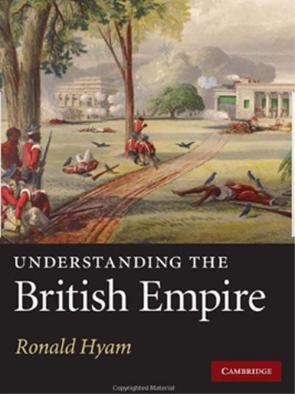
I am currently reading Understanding the British empire, a collection of essays by the eminent imperial historian Professor Ronald Hyam. Whereas historians often display a studied detachment or even mild cynicism towards the politicians they study, Professor Hyam comments:
Perhaps to help shift units, the publishers should highlight the essays that deal with Hyam's preoccupation with sexuality and empire, including one entitled 'Penis envyand "penile othering" in the colonies and America'.
I am currently reading Understanding the British empire, a collection of essays by the eminent imperial historian Professor Ronald Hyam. Whereas historians often display a studied detachment or even mild cynicism towards the politicians they study, Professor Hyam comments:
...government is about taking almost impossibly wide perspectives, and it is an extremely difficult business. Historians should respect that fact, at least when they are assessing intelligent men [sic] of goodwill and sound mind.He quotes the imperial proconsul Lord Cromer as writing:
Even leaving aside Professor Hyam's empathy with the difficulties confronted by those who have to make difficult decisions, this is an excellent book, both scholarly and accessible and the culmination of a lifetimes work. No doubt it will not sell as well as books by more famous and less knowledgeable authors, but it deserves to reach a general audience.More than forty years experience behind the scenes of poltiical life has led me to be a very indulgent critic on the faults of political men [sic again]. I have come to the commonplace but very true conclusion, stated by Taine in the preface to his great work - namely, that the government of human beings is a very difficult task, and that in dealing with them it is far easier to go wrong than to go right.
Perhaps to help shift units, the publishers should highlight the essays that deal with Hyam's preoccupation with sexuality and empire, including one entitled 'Penis envyand "penile othering" in the colonies and America'.
Thursday, December 15, 2011
Controversialists should not sue for libel
Historian Niall Ferguson's threatened libel suit over a negative review of his latest book is discussed on David Allen Green's excellent New Statesman blog (if only his articles appeared in the magazine I might have renewed my subscription).
The moral of the story is that those who make a living from the expression of controversial opinions (and for that matter Bloggers and the like who do it as a hobby) really shouldn't run to the libel laws when they find themselves criticised (however unfair the criticisms might seem).
Last year when Professor Orlando Figes got himself in a spot of bother over anonymous reviews he posted on Amazon, the problem was less that he posted the reviews at all, but rather his threat to sue when (correctly) accused.
Ferguson is always likely to arouse the ire of those who disagree with his neo-Thatcherite take on history and a hostile review in a small-circulation publication is hardly likely to damage his reputation. Figes' trashing of fellow historians' books would have been little more than an amusing curiosity if he hadn't tried to silence them when they rumbled him.
It might be a different matter if, like poor Christopher Jefferies, they were wrongly accused of a vile crime. But for the most part anyone who courts contoversy has to be able to take it as well as give it. The best way to deal with unfair criticism is to rebut it in print. Those tempted to sue would be better taking a couple of aspirin and having a lie down until the mood passes.
Green's article is worth reading in full, but I was rather taken with one quote in it. When A.J.P. Taylor's The origins of the second world war was savaged by Hugh Trevor-Roper, who said it would harm his reputation as a serious historian, Taylor replied:
The moral of the story is that those who make a living from the expression of controversial opinions (and for that matter Bloggers and the like who do it as a hobby) really shouldn't run to the libel laws when they find themselves criticised (however unfair the criticisms might seem).
Last year when Professor Orlando Figes got himself in a spot of bother over anonymous reviews he posted on Amazon, the problem was less that he posted the reviews at all, but rather his threat to sue when (correctly) accused.
Ferguson is always likely to arouse the ire of those who disagree with his neo-Thatcherite take on history and a hostile review in a small-circulation publication is hardly likely to damage his reputation. Figes' trashing of fellow historians' books would have been little more than an amusing curiosity if he hadn't tried to silence them when they rumbled him.
It might be a different matter if, like poor Christopher Jefferies, they were wrongly accused of a vile crime. But for the most part anyone who courts contoversy has to be able to take it as well as give it. The best way to deal with unfair criticism is to rebut it in print. Those tempted to sue would be better taking a couple of aspirin and having a lie down until the mood passes.
Green's article is worth reading in full, but I was rather taken with one quote in it. When A.J.P. Taylor's The origins of the second world war was savaged by Hugh Trevor-Roper, who said it would harm his reputation as a serious historian, Taylor replied:
The Regius professor's methods of quotation might also do serious harm to his reputation as a serious historian, if he had one.As far as I am aware, Trevor-Roper didn't sue.
Sunday, December 11, 2011
Are the Lib Dems really pro-European?
I was planning to get my head round this whole Euro row thing so that I could post something vaguely coherent on here. But Jonathan Calder (Small row in Europe, not many hurt) has pretty much summed up my view, so why say the same thing again when one can just post a link?
It seems to me that the reaction of Lib Dems to the Cameron veto has been relatively restrained. I don't really find this surprising. Lib Dem attitudes towards Europe reminds me of G.K. Chesterton's The man who was Thursday. In this novel, the members of an anarchist cell are one-by-one revealed to be undercover policemen. In a similar way, Lib Dem activists, often portrayed in the media as starry-eyed pro-Europeans, are more often than not undercover Eurosceptics. Time and again I let slip in conversation to a Lib Dem colleague that I don't quite share the party's zeal for the European project only to be told that neither do they.
Genuine Euro-enthusiasts seem to me relatively thin on the ground in the Lib Dems, although one did tell me during the 2005 general election that the campaign was a useful building block for the referendum on the European constitution. But such sentiments are relatively rare. I am not of course saying that there are many Lib Dems who are Eurosceptic in the Tory sense (obsessive about sovereignty and regulations). It's just that it wouldn't surprise me if the Euro-doubters are actually a majority in the party, but have simply assumed we are in a minority and not felt strongly enough ever to put up a fight on the issue.
I suppose the next few days and weeks will show quite how brightly the Pro-European star burns within the Lib Dems.
It seems to me that the reaction of Lib Dems to the Cameron veto has been relatively restrained. I don't really find this surprising. Lib Dem attitudes towards Europe reminds me of G.K. Chesterton's The man who was Thursday. In this novel, the members of an anarchist cell are one-by-one revealed to be undercover policemen. In a similar way, Lib Dem activists, often portrayed in the media as starry-eyed pro-Europeans, are more often than not undercover Eurosceptics. Time and again I let slip in conversation to a Lib Dem colleague that I don't quite share the party's zeal for the European project only to be told that neither do they.
Genuine Euro-enthusiasts seem to me relatively thin on the ground in the Lib Dems, although one did tell me during the 2005 general election that the campaign was a useful building block for the referendum on the European constitution. But such sentiments are relatively rare. I am not of course saying that there are many Lib Dems who are Eurosceptic in the Tory sense (obsessive about sovereignty and regulations). It's just that it wouldn't surprise me if the Euro-doubters are actually a majority in the party, but have simply assumed we are in a minority and not felt strongly enough ever to put up a fight on the issue.
I suppose the next few days and weeks will show quite how brightly the Pro-European star burns within the Lib Dems.
Monday, December 05, 2011
On Hislop and the bankers
My critique of Ian Hislop's recent BBC documentary When Bankers Were Good appears on the History & Policy website. It begins:
... although entertaining and informative, Hislop's programme could also serve as a warning against using history to advance a contemporary policy prescription on the basis of very thin evidence.Among the aims of the website are to: 'demonstrate the relevance of history to contemporary policy making and to increase the influence of historical research over current policy.'
Sunday, December 04, 2011
Halfway to New York: Out of time
From my stepson travelling in South America I receive a text telling me that a friend he used to be in a band with, is now in a new band and they have a single out. Would I download it from iTunes?
I did so more as a favour than anything else, imagining I might give it a perfunctory listen before reverting to better things.
But it is actually very good indeed, outstanding even - in a kind of indie/rock/pop style. It is called Out of time by Halfway to New York. When they are famous I will be able to say: 'My stepson used to be in a band with the guitarist, you know'. So listen to it via the youtube link and if you like it download the song.
Subscribe to:
Posts (Atom)